
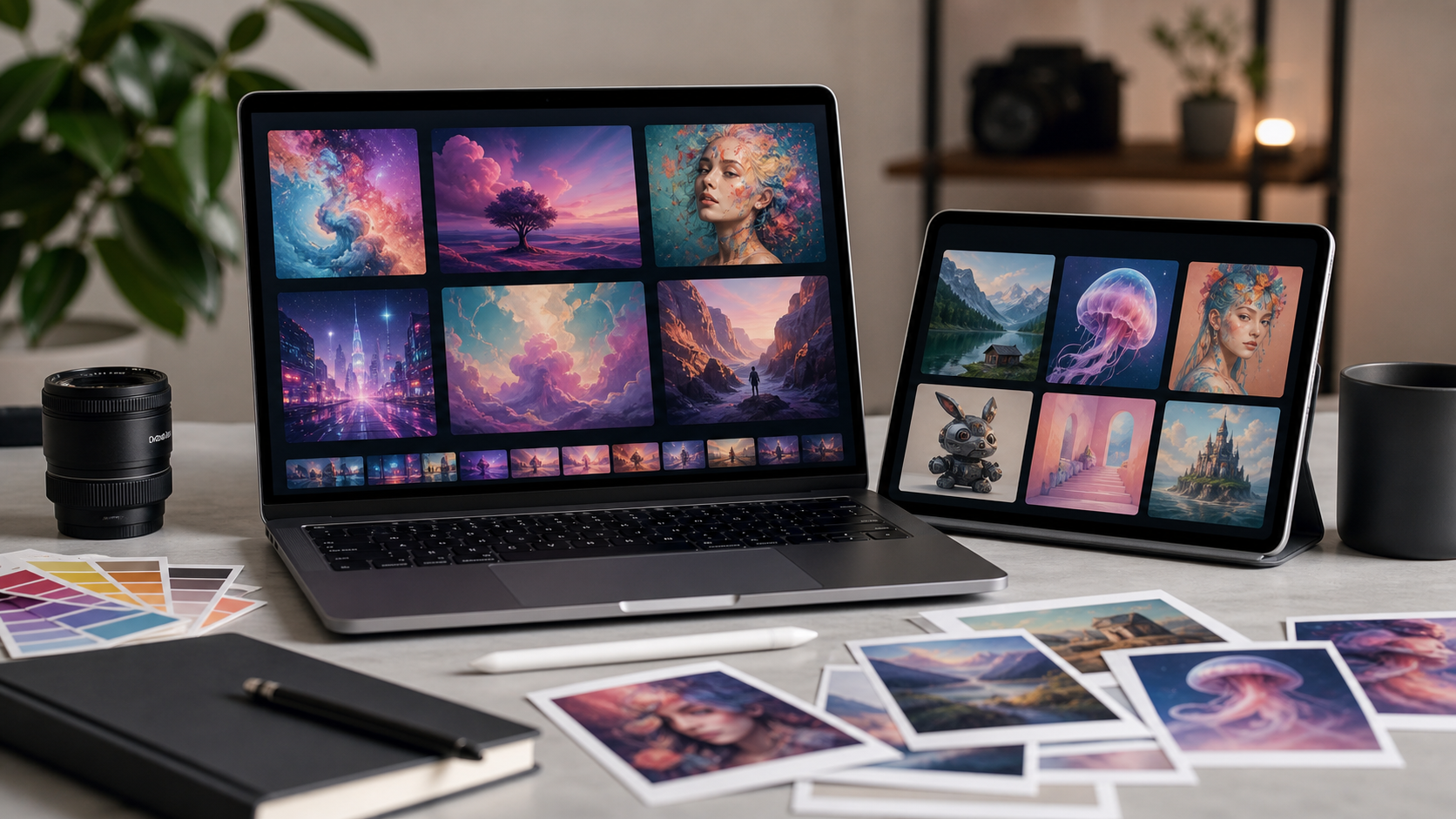
Best AI Image Generators 2026-05-21 for Beginners
AI image tools help beginners make concept art, product mockups, social posts, thumbnails, and mood boards with text prompts. Best choice depends on ease, price, rights, speed, and edit controls.

Quick picks for beginners
- Best simple start: tool with templates, prompt help, and clear export buttons.
- Best for marketing images: tool with brand kits, aspect ratios, and text layout support.
- Best for art play: tool with many styles, remix controls, and image-to-image mode.
- Best for careful work: tool with edit history, privacy settings, and content filters.
What beginners should compare
- Prompt help: examples, negative prompts, style presets.
- Editing: erase, replace, expand canvas, upscale.
- Output quality: faces, hands, text rendering, lighting, consistency.
- Commercial terms: check license before client or ad use.
- Cost: monthly credits, rollover rules, paid add-ons.
- Safety: watermark policy, training data terms, private generation options.
Recommended option: AI Subscription Offers
AI Subscription Offers good fit if you want one place to compare AI tool plans before picking image generator subscription. Use it to review pricing, features, and plan limits.
Affiliate link: https://example.com/ai-subscription
Pick this route if you dislike jumping between many pricing pages. Compare plan caps before paying. Look for image credits, export size, commercial rights, and cancellation terms.
Beginner buying tips
- Start monthly, not yearly, until workflow feels right.
- Test same five prompts across tools.
- Check if tool handles your main format: square, portrait, landscape, ad banner.
- Read commercial license for paid work.
- Save prompts that work. Small wording changes can alter output.
- Avoid uploading private faces, client files, or sensitive brand assets unless privacy terms fit.
Common mistakes
- Buying before testing output quality.
- Ignoring credit limits.
- Assuming all images can be used commercially.
- Expecting perfect text inside images.
- Using vague prompts like “make cool poster.”
- Skipping edits when first result is close but flawed.
Final checklist
- Choose tool based on main use case.
- Test free or low-cost plan first.
- Compare credits, exports, and license terms.
- Check privacy settings.
- Keep prompt notes.
- Upgrade only when results save time or improve output.