

How to Choose AI Research Tools 2026-05-20
AI research tools can speed reading, search, note sorting, citation checks, and draft planning. Good pick depends on source quality, workflow fit, privacy needs, and budget.
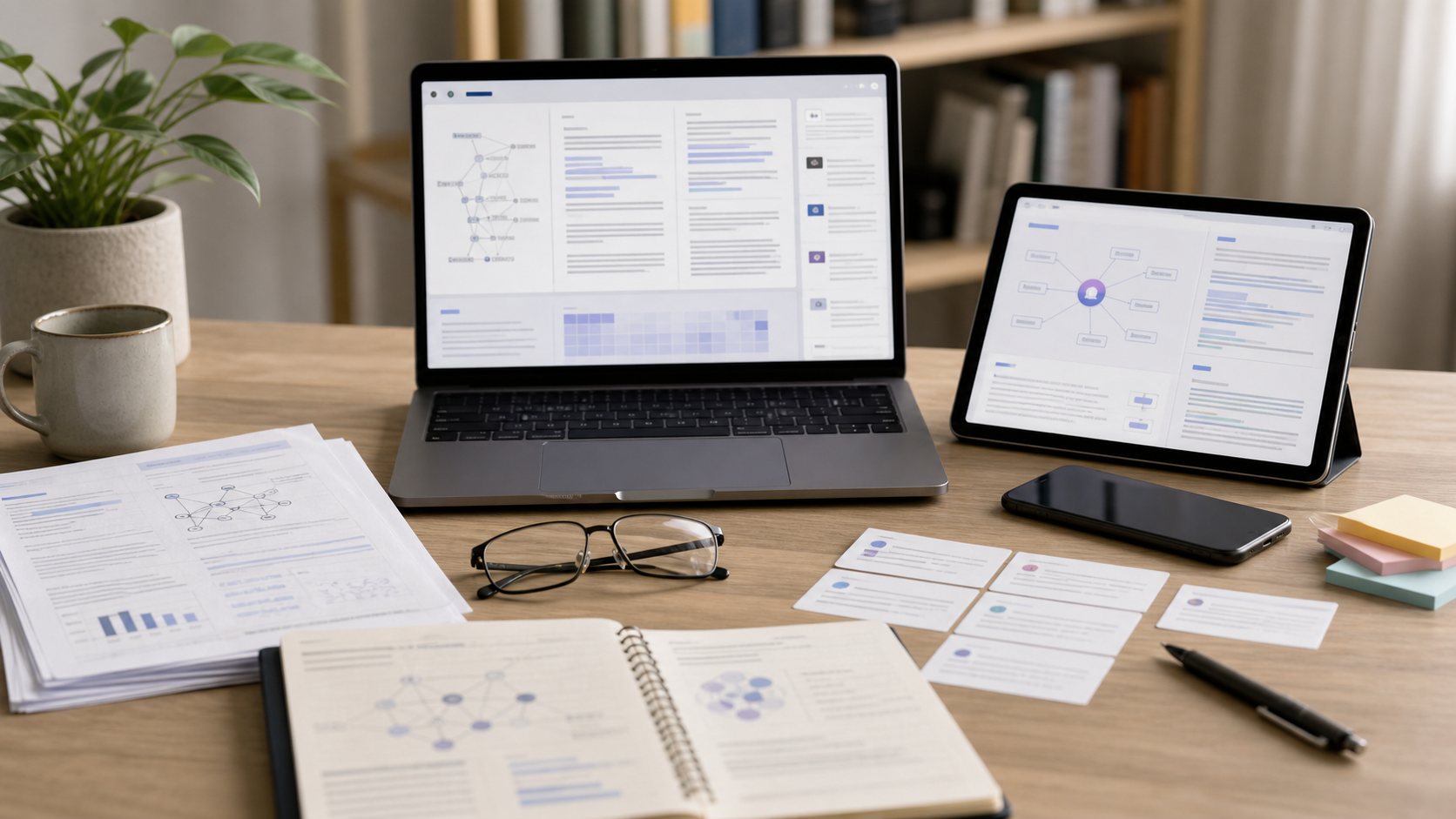
What AI research tools do
AI research tools help find papers, summarize text, compare sources, extract claims, build notes, and format citations. Tool value comes from accuracy, traceable sources, and time saved.
Use case matters:
- Student: citation help, paper summaries, note export.
- Researcher: source discovery, PDF chat, reference manager sync.
- Marketer: trend scan, competitor research, brief creation.
- Business team: internal knowledge search, report drafting, meeting notes.
Key features to compare
Check these before paying:
- Source links: answer should point back to source text.
- Citation export: BibTeX, RIS, or common reference manager support.
- PDF handling: upload limits, OCR quality, table reading.
- Search depth: academic databases, web sources, internal files.
- Accuracy controls: quote view, page numbers, confidence notes.
- Privacy: data retention, training use, admin controls.
- Collaboration: shared folders, comments, team seats.
- Integrations: browser, docs, notes, reference managers.
- Cost: seat price, usage caps, upload caps, model limits.
Recommended option: AI Subscription Offers
AI Subscription Offers can suit buyers who want one place to compare AI plans, test research workflows, and watch subscription cost.
Use approved link:
https://example.com/ai-subscription
Best fit if you want:
- Paid AI tool shortlist.
- Subscription comparison.
- Research workflow trial.
- Central buying path.
Not best fit if you need only one free citation manager or institution-provided database access.
Accuracy and source quality checks
Do not trust summary alone. Verify source.
Good tool shows:
- Direct quote or source snippet.
- Page number for PDF claims.
- Clear citation metadata.
- Date and author when available.
- Difference between source fact and AI interpretation.
Weak tool shows:
- Vague source list.
- Broken citations.
- No page references.
- Confident answer with no evidence trail.
Privacy and data rules
Research often includes unpublished work, client files, medical notes, legal text, or company data. Read privacy terms before upload.
Check:
- Whether uploads train models.
- Retention period.
- Delete controls.
- Team admin permissions.
- Encryption claims.
- Compliance docs if needed.
For sensitive files, use enterprise controls or local-approved tools only.
Price and plan traps
Low monthly price can hide limits.
Compare:
- Query caps.
- PDF page caps.
- File size caps.
- Premium model access.
- Team seat minimums.
- Export limits.
- Renewal price.
Run same three tasks on each tool before yearly plan.
Buying method
- Write top three research tasks.
- Pick five real sources.
- Test search, summary, citation, export.
- Check privacy terms.
- Compare monthly and annual cost.
- Choose tool with best evidence trail, not flashiest answer.
Final checklist
- Need matches tool strengths.
- Sources traceable.
- Citations export clean.
- PDF handling works.
- Privacy terms acceptable.
- Usage caps fit workload.
- Team features fit users.
- Price works after trial.
- AI Subscription Offers checked.